
What Is Social Proof in Ecommerce and How Can You Use It?
Equipo Tilopay · 2 de julio de 2024

Learn how to leverage social proof in ecommerce to build trust and increase conversions. Find effective tips and strategies here.
Social proof is a psychological phenomenon defined as a social influence tactic in which people assume that the actions of others are correct and imitate them. In the context of ecommerce, social proof is a powerful tool that can override the effect of money-based reciprocity.
Essentially, people trust the opinions of other consumers more than direct claims from a brand. In today’s era of fast-moving information, distrust and data sensitivity lead consumers to conduct extensive research before buying something online. Research shows that the average time spent making a purchase decision ranges from 40 to 137 days.
<< Fast, secure, and hassle-free online payments for your business >>
Common digital marketing tactics are no longer effective for everyone, especially because of sensitive data concerns, and brands are looking for innovative, reliable ways to communicate. This is where social proof comes in. Considered one of the most trusted tools, it combines engagement, time savings, and consumer behavior.
Social proof: a powerful driver for ecommerce
As people spend more time online, their concerns also grow:
- Could this website be a scam?
- Isn’t it too cheap to be a good product?
These questions are everywhere in ecommerce and can cost you many customers. How can you prevent these concerns? Social proof is the answer. Here are some interesting statistics to keep in mind:
- 89% of consumers are “highly” or “fairly” likely to use a business that responds to all of its online reviews.
- Displaying certifications and awards can increase your conversion rate by up to 400%.
- 88% of consumers trust user reviews as much as personal recommendations.
- Influencer marketing is now the fastest-growing customer acquisition channel.
- Shoppers need an average of 40 online reviews before they believe a company’s rating is accurate.
8 types of social proof
If social proof has caught your attention, it’s important to know that there are several ways to approach this strategy. Here is a list of the most widely used social proof techniques in ecommerce:
1. Endorsements
Because every ecommerce business has a unique market focus, the options for valuable third-party endorsements also vary. For example, influencer endorsements are highly effective for clothing products, while expert endorsements work better for software services.
These people have their own communities that they influence, and they know how to communicate with their members. They could provide a valuable channel not only for promoting your products, but also for associating them with a source your customers trust.
With the influencer movement at its peak, now is the perfect time to include influencers in your social proof strategy. However, you should spend considerable time researching them, since an influencer’s beliefs can carry over to your brand and cause the public to associate you with their ethics and integrity. Being influential does not necessarily mean someone will benefit your business.
2. Reviews and testimonials
Although there are many forms of social interaction in ecommerce, online ratings and reviews are the most widely adopted.
Yes, almost every internet user does this!
People’s personal experiences with your products provide strong authenticity. How products perform in real-world use is often a hot topic in the reviews section. These types of reviews help other prospects considering the same product, especially when forming an impression of the product lifecycle or setting expectations for how support issues are handled.
Customers can also rate your products—and who doesn’t like seeing a five-star rating while people share their great experience with your business?
Testimonials are an alternative to reviews. Fully controlled and displayed by you with customer approval, testimonials are qualitative social proof content that lets you separate valuable reviews from poor ones.
Whichever option you choose, don’t forget to display it on your homepage to build more trust!

3. Rating platforms
Sometimes, the customer ratings displayed on your website are not enough. Skepticism may lead prospects to question the reliability of these claims.
In these situations, third-party rating platforms are the answer. These platforms allow verified users from around the world to rate your product and share their feedback.
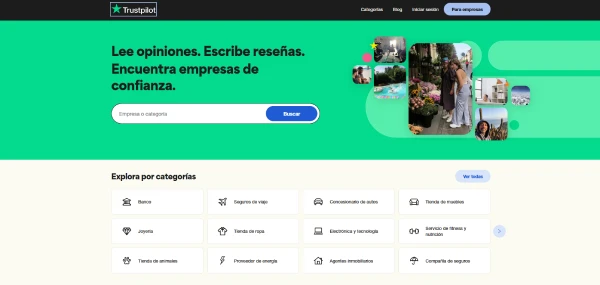
Pay attention to Google Reviews, Yelp, Facebook, Trustpilot, and Trip Advisor (if you’re in the tourism industry). Start by creating or claiming your business account on these platforms, then develop a strategy for inviting satisfied users to share their impressions of your products there.
4. Case studies
You want to show prospects and customers that your business is completely focused on them. Case studies are one of the most professional ways to show that your company values its customer relationships and takes pride in the results it achieves for them. This is an elegant way to create social proof together with your customers, and it also provides valuable insights into your products and how customers use them, benefit from them, and improve their lives with them.
Whether it’s software used for work or a home security system, case studies will help you better explain why people need your product and give them the opportunity to see how other users have achieved success through your offering.
They are also one of the longest-lasting social proof techniques and can be repurposed as content for your social media, newsletters, campaigns, blog posts, and more for a long time.
5. Trust badges
Compliance details are sensitive and important, and not every internet user knows how to verify them, especially when shopping online. Everyone may be leaving those wonderful reviews, but what should you do if prospects still don’t trust the brand itself enough?
This is when you need to provide greater credibility. Whether it’s a national compliance certification or an international award, simply displaying it at every touchpoint could help prospects make a more informed decision. You can share these trust badges on your homepage, on social media, or even incorporate them into your content designs (data sheets, newsletters, and more).
Here are some examples of trust badges:
- Certifications
- Secure and encrypted payment
- HTTPS and SSL certificates
- Free and easy returns
- Antivirus software logos
- Money-back guarantees
- Ratings from third-party sites (Trustpilot, etc.)
- Logos from high-profile news outlets
- Logos of brands the customer already trusts
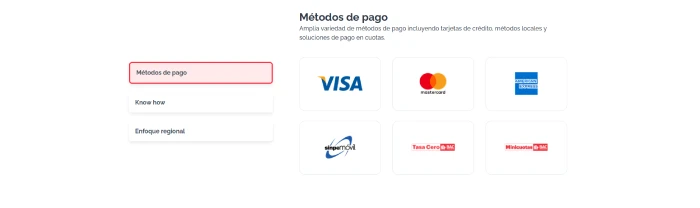
- Logos of payment methods such as Visa, Mastercard, or Tilopay
A simple trust badge will strengthen your engagement process and add more credibility to your brand’s claims.
6. Referrals
For ecommerce businesses, for example, referral traffic has one of the highest conversion rates of any social proof technique. But don’t overlook this approach, because it can apply to any ecommerce business.
Every customer is a potential source of new prospects, so encouraging referrals fits perfectly into your strategy. Most of the time, referrals are a type of rewarded favor requested from customers. But make sure you use them in moderation so you don’t reduce recurring revenue. Each customer should have a limited number of referrals for which they can earn rewards.
7. Expert reviews
An expert’s opinion of your product has the potential to be viewed as professional advice with a certain level of authority. Because it comes from a more knowledgeable perspective within their area of expertise, an expert opinion becomes a valuable tool in social proof practices.
However, keep in mind that the type of product being reviewed is also an influential factor when assessing the nature and role of social proof. An expert review is useful not only as an endorsement, but also because it uses the most appropriate and easy-to-understand language to communicate more effectively with your prospects.
Therefore, focusing on expert opinions is highly effective, especially when customers are purchasing expensive or technically complex products.
8. Social proof on social media
Finally, as you carefully decide which social proof strategy best fits your type of ecommerce business, don’t limit your perspective to external elements. Your own social media presence generates valuable social proof resources that can benefit you.
Keeping track of social media mentions of your brand, reviewing and responding to discussions on Facebook and Instagram, joining social media groups, and interacting with prospects humanizes your brand and brings it closer to current and potential customers.
Where to leverage social proof
Once you’ve gathered all the essential social proof strategies to strengthen your ecommerce business, you need to make sure prospects encounter them in all the key places.
A common and reliable place for this is your website’s homepage. Whether you display it prominently on the page or in a pop-up, organize your homepage UX so that every visitor encounters an element of social proof.

Conclusion
Social proof is essential. Your ecommerce business may already have content ready to use. You just need to take it and shape it in the way that best fits your business. Consider your ethical principles and industry trends. What type of social proof is right for you?
Once you’ve answered this question, get creative! People will love a unique interaction with your brand. And don’t forget to use the power of social media. Share, share, and share everything, everywhere.
Customer engagement is a process. Make the most of it with social proof!