
Shopify, Wix, WooCommerce, or VTEX: How to Choose an Ecommerce Platform for Your Business
Equipo Tilopay · 12 de agosto de 2025
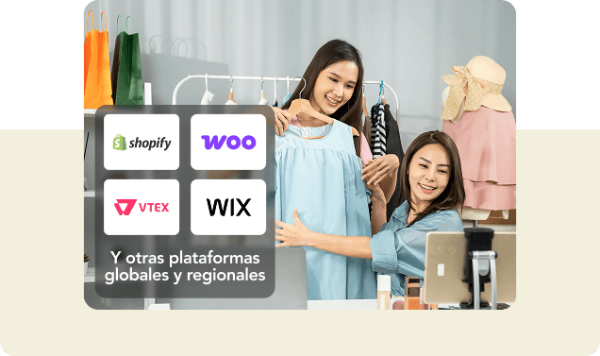
Choosing between standalone tools and a complete payment ecosystem can shape your business’s growth. This guide helps you decide.
Over the past decade, ecommerce has evolved from an experimental opportunity into a core component of business growth strategies. However, while many businesses focus on their online store’s design or high-reach advertising campaigns, a surprisingly high percentage underestimate the true potential of the platform they use.
Shopify, Wix, WooCommerce, and VTEX are more than digital storefronts. When properly configured and integrated, they can become powerful growth engines capable of multiplying sales, streamlining operations, and opening new markets in a matter of weeks.
The challenge is that most businesses use only a fraction of the power these platforms offer. They install them, upload products, enable the “pay” button, and wait for results. What they don’t always see is that the platform is only the engine. To get maximum performance from that engine, you need to fine-tune it, optimize it, and connect it to the rest of your business systems.
<< Fast, secure, hassle-free online payments for your business >>
1. What is the best ecommerce platform for my business?
Before asking “which platform is best,” the right question is: Which platform is the most strategic fit for my current business model and the one I want to have in three or five years?
This medium-term vision is critical because migrating from one solution to another isn’t just a technical challenge. It can lead to sales disruptions, data loss, and significant operating costs.
Key questions to help you decide:
- Scalability: Do you plan to sell only in your country or in other markets as well?
- Control and customization: Do you need advanced customization of your internal sales, billing, or logistics processes?
- Implementation speed: Is it more important to launch quickly or to have a fully customized infrastructure?
- Critical integrations: Which systems does your business already use—such as ERP, CRM, or accounting software—that the platform must connect with seamlessly?
Answering these questions helps you narrow down your options and, above all, understand that the real goal isn’t to choose the “trendy platform,” but the one that can become a driver of sustainable growth.
2. How do I turn my platform into a sales and payment ecosystem?
Whether you use Shopify, Wix, WooCommerce, or VTEX, sustained growth happens when the platform stops being just a store and becomes a sales and payment ecosystem. This requires optimizing four critical areas:
1. How can I reduce cart abandonment with an optimized checkout?
According to Baymard Institute, 70% of shopping carts are abandoned before the purchase is completed. Of those, 17% are abandoned solely because the payment process is too long or complicated.
Optimizing checkout means:
- Minimizing clicks and steps.
- Avoiding unnecessary redirects.
- Showing final costs upfront.
- Offering multiple payment options that are relevant to the customer.
2. Which payment methods increase my conversion rate?
Across the region, methods such as Sinpe Móvil in Costa Rica, Yappy or Tafi in Panama, and instant bank transfers in other countries are no longer optional. They’re part of the standard consumers expect.
Combining local payment methods with international options—cards, digital wallets, and installment payments—does more than expand your market: it increases your conversion rate.
3. Why are centralized analytics essential for scaling?
Every transaction provides valuable data: average order value, approval rate, customer source, and purchase frequency.
Without a centralized analytics layer that brings this data together, you’re making strategic decisions in the dark.
4. How can payment automation stabilize my revenue?
Automation allows your platform to keep generating revenue without constant manual intervention through recurring payments, automated billing, deposit releases, and payment reminders.
For subscription or booking models, this isn’t just an operational improvement—it’s a pillar of financial stability.
3. What can I implement in my business to drive growth?
Process payments reliably during high-traffic campaigns
During flash sales, an optimized checkout processes simultaneous payments without outages or errors, ensuring every click turns into a confirmed sale. This is essential during traffic spikes such as Black Friday, product launches, or presales.
Sell internationally without currency friction
Showing prices in the customer’s local currency, including taxes and familiar payment methods, removes barriers and increases completed sales.
Automatically recover abandoned carts
A direct payment link sent by email or message lets customers complete their purchase in one click, without manual follow-up.
Offer flexible payment options based on customer profile
Installments, one-time payments, or bank transfers: tailoring your payment options to each profile increases conversion and satisfaction.
Manage recurring payments without manual work
Ideal for subscriptions or memberships, it prevents errors and ensures predictable revenue.
4. Which platform best fits my strategy?
Shopify
Fast international scalability with ready-made integrations and a short learning curve.
WooCommerce
Full control and extensive customization thanks to its open-source nature, although it requires more technical management.
Wix
Ideal for launching quickly with an attractive design and no technical complexity.
VTEX
Designed for businesses that need true omnichannel capabilities and inventory synchronization.
5. Which mistakes prevent my platform from becoming a growth engine?
- Ignoring local payment methods: This limits access for customers who don’t use international cards.
- Not measuring checkout performance: Without KPIs, improvements are based on intuition rather than strategy.
- Relying on generic integrations: This sacrifices flexibility and responsiveness.
- Failing to plan for scalability: What works today for 100 orders per month may collapse at 1,000.
6. What does a strategic integration really mean?
The common denominator among businesses that turn their platform into a growth engine is how they integrate the payment layer.
A strategic integration:
- Adapts to the country and type of business.
- Provides real-time visibility.
- Scales without rebuilding the infrastructure.
- Reduces friction for the end customer.
7. What’s the next step to maximize my platform’s performance?
Turning Shopify, Wix, WooCommerce, or VTEX into a growth engine requires strategic vision and flawless technical execution.
While each platform offers a solid starting point, the real competitive advantage lies in how you integrate payments, unify data, and optimize every transaction.
That’s where Tilopay comes in.
Our mission is simple: to make every payment drive your business forward. With integrations optimized for all these platforms, local and international payment methods, unified analytics, and advanced automation, we turn your payment system into a sales and expansion accelerator.
If you’re ready for your platform to become more than just a store and turn into a growth engine, create your account at tilopay.com/start.